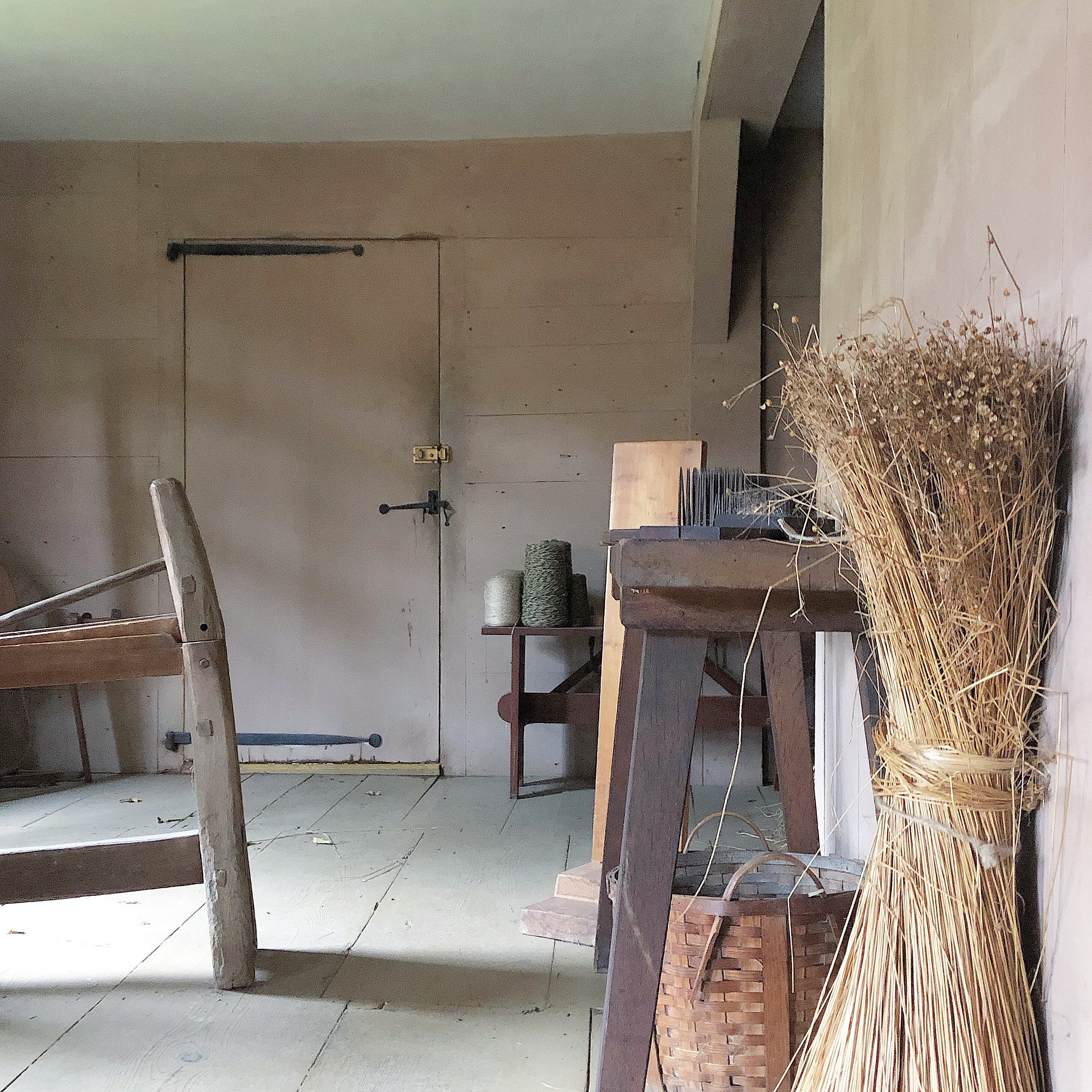
lost in fiber library | writing sessions
The more complex the network is, the more complex its pattern of interconnections, the more resilient it will be. – F.C.
This quote from author, physicist, systems theorist and deep ecologist, Fritjof Capra, summarizes the spirit of the Lost in Fiber library ‘archiving’ system. That is, finding connection and interrelatedness via intuitive threads and creative complexity.
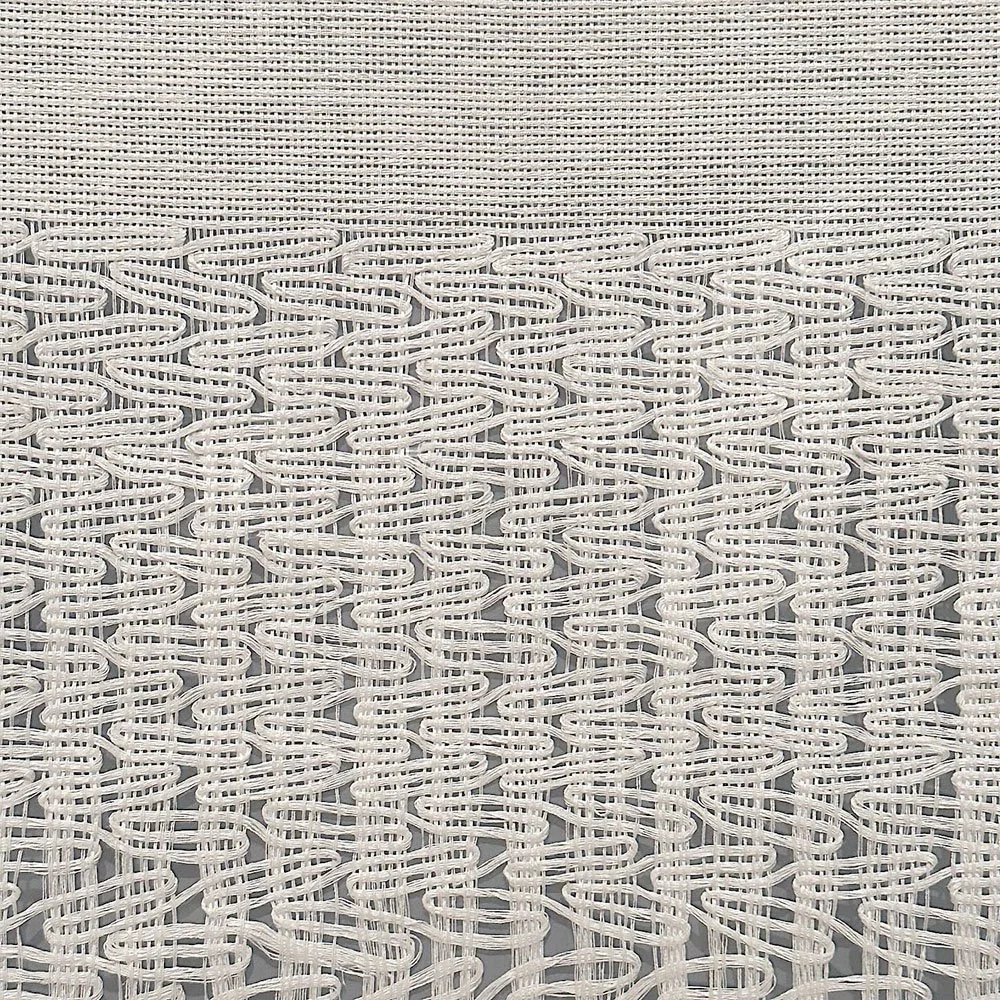
[ image: weaving by Shelia Hicks on view in ‘Weaving Abstraction in Ancient and Modern Art, Metropolitan Museum of Art | photo: Abigail Doan studio ]
Session 07. Weaving One’s Space
[ April 2026 ]
Inspired by Virginia Woolf’s seminal 1929 feminist essay, A Room of One’s Own, I have been thinking a lot about the importance of weaving one’s own space – both as a personal need and as a practical way for making any environment more conducive to creative work.
I read A Room of One’s Own during my late teens, and this overlapped with a period when I would spend a lot of time alone in my room arranging objects for tabletop still lifes, writing, and imagining other worlds in the quiet of a farmhouse setting.
It was in this stillness that periods of focused concentration and ‘warp and weft’ storylines came to life. I am often reminded of the independence that I felt as I wove together materials and created makeshift compositions in the room’s pockets of space.
When I travel today, I like to go off the beaten path to look for buildings or landscape structures that resemble living weavings. The weathering of an old facade or roofline, together with surrounding natural forms, creates a ‘warp and weft’ of resilient beauty.
One’s designated space might be an actual work studio or simply a moment in time where things are permitted to come together. I am reminded of a piece I once wrote on the work of Dutch artist Maria Blaisse and her bamboo mesh structures. Beyond our defining time and place to pursue our goals, I find the idea that the body itself might participate in how we weave together our space(s) inspiring. The fluidity of this process may help us adapt to or redefine interior realms. A room of one’s own might be the time where things are allowed to unfold, new arrangements can breathe or take shape, and simple gestures propel us forward.
Prompt/Reflection: How do you weave space of your own, either in the timeline of your day or via physical means in the space(s) that you have available? How does your own body inform this practice? What traces do you leave behind or not?
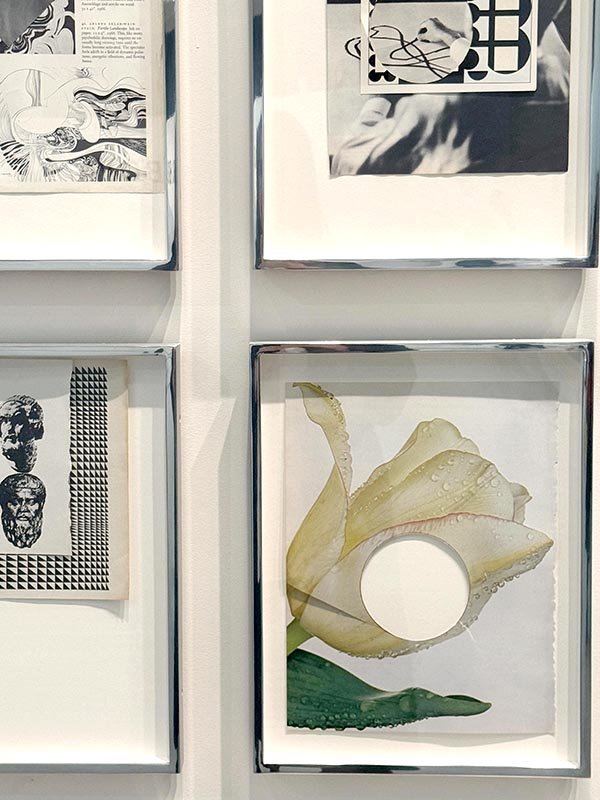
[ image: Carol Bove collages at the Guggenheim NYC | photo: Abigail Doan studio ]
Session 06. Collage and Openness
[ March 2026 ]
I entered a new decade this week, and even though I had done a lot of mental and spiritual preparation for this, it made me laugh a bit that a major milestone birthday did not seem so important. I was more excited about clearing my calendar for the day and the week, as the prospect of doing less felt more like an indulgent luxury than a blowout celebration.
I approached this birthday like an open collage – an opportunity to lay myriad pieces and scraps out on the work table to be amused by how they do or do not fit together. Nothing forced, nothing planned or pleasing per se, and definitely nothing final in composition. This was liberating. Perhaps the ideal green light for what lies ahead.
I have been considering the processes of other artists in this way. What is the messy underside or the secret lining of what they do? Where do they decide to pause or shift creative direction, and where do they reveal untidy edges or vulnerabilities? To take this further, might there even be instances where art-making is not an ideal form of expression? Might one be insightful enough to pursue a project via another medium or with the input of an outside collaborator? When might striving for an end product also kill the spirit of what one is actually envisioning?
We obviously need to cultivate creative and personal goals – as well as milestone celebrations, but there is also a certain wisdom in knowing when to leave things more open-ended. Perhaps this is maturity, or perhaps it is an acknowledgement that past ways of doing things are not as effective or satisfying.
In an era when so much emphasis is placed on polishing our content and defining our mission, particularly on social media, it may be more engaging and insightful to notice when cracks appear and expand, or why we have veered off track to explore another possibility or digression.
Collage has a way of showing us how things might come together in unexpected ways and then reassemble in a completely different manner. Sometimes the messy and unedited work table reveals what we need to see, or even more so, intuit.
I like this approach. It is modern, harmonious, and oddly forgiving.
Reminds me of this timely artist quote:
“I make collages. I join the shattered world, creating a new harmony.”
– Louise Nevelson, sculptor
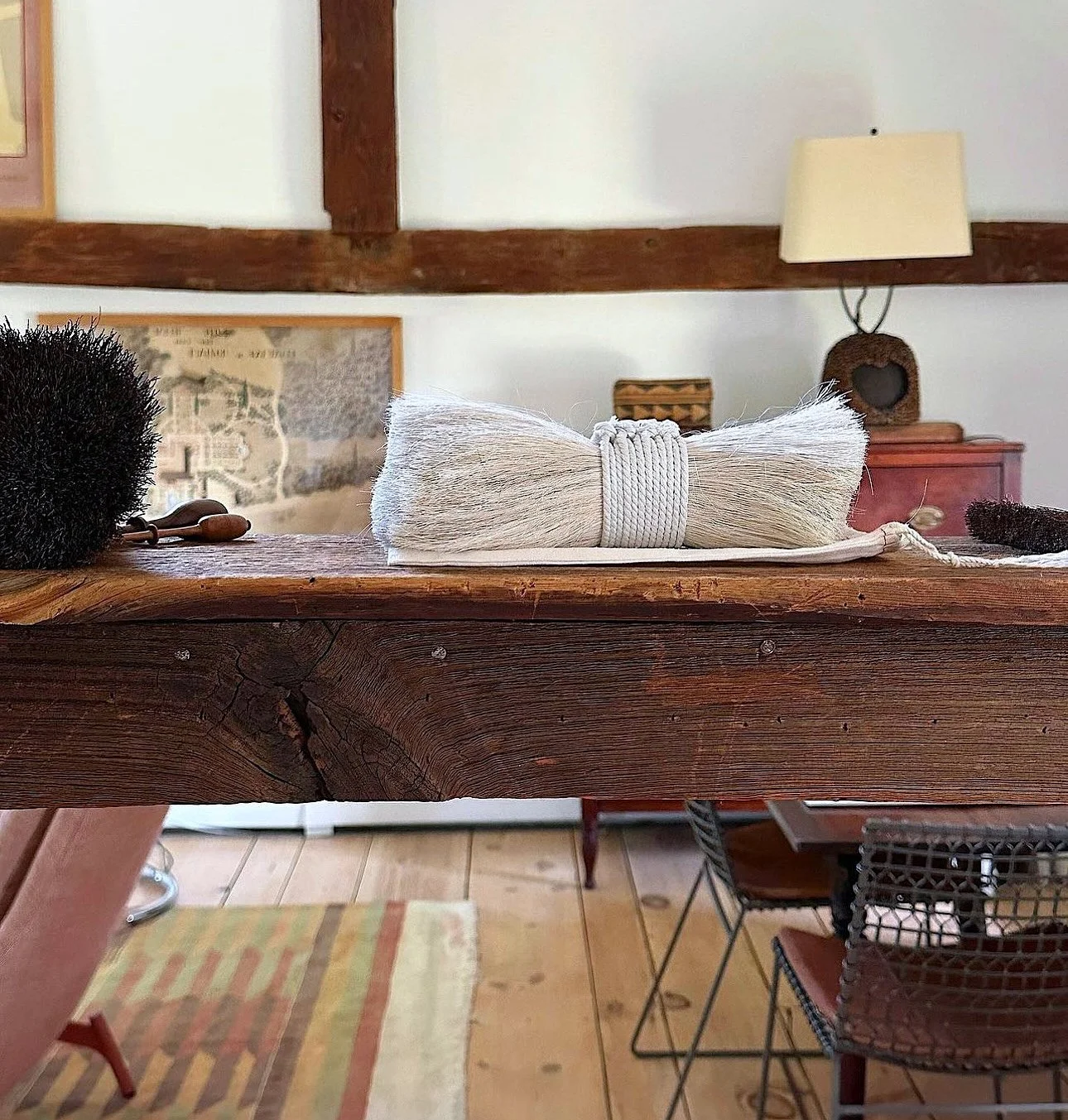
[ image: upstate interior | Abigail Doan studio ]
Session 05. Daydreaming as Rest
[ February 2026 ]
My family’s farmhouse in the Hudson Valley always had a fusion of antiques, tools, and textiles in each room. In addition to the renovated spaces and irregular, wide-plank floorboards, the walls were plastered to almost emphasize surface imperfections. Old beams provided a framework for hanging baskets and dried grasses, while the spinning wheel was wedged in between our television and wood stove. These were evolving spaces—like rooms in a living museum—but also settings where hidden narratives might unfold. It is no surprise that today I view the objects in my home and workspace as props of sorts, or as vessels that hold stories and offer windows into other vistas.
My current urban space is a place to daydream and journey deeper. I was heavily influenced by the writings of French philosopher Gaston Bachelard while in college, and his ideas in The Poetics of Space still resonate.
“The house collects and contains past, present and future; it integrates thoughts and memories and desires – all this it does by allowing the human to ‘daydream’. The house we were born in, Bachelard writes, ‘is more than an embodiment of home, it is also an embodiment of dreams. Each one of its nooks and crannies was a resting-place for daydreaming.’” [ source ]
Daydreaming, for me, is not a distraction; it is a way of unveiling deeper layers. In these moments of reverie, everyday surroundings become an intimate landscape where thoughts can wander, connect with distant memories, and suggest new possibilities for how to live and create. I also think about what visual prompts might be highlighted to connect us to a more universal feeling of home or place—something that allows us to rest or, as Bachelard suggests, to create a resting place for daydreaming. It may be this possibility of creating a place of rest that draws us in—a much-needed counterpoint in a world where the constant flow of information leaves us feeling rootless and strangely disconnected.
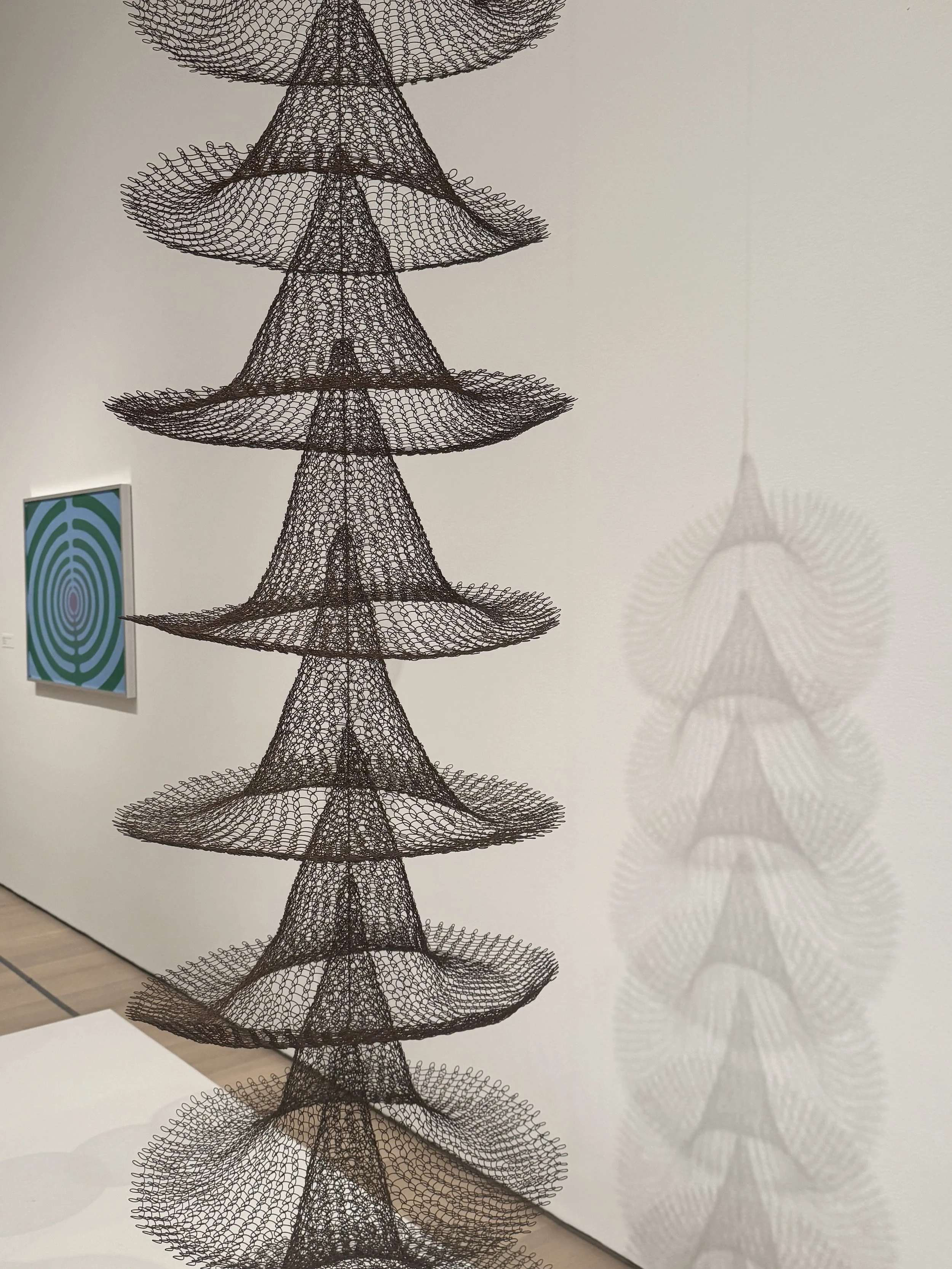
[ image: Ruth Asawa @ MoMA, NYC, 2026 ]
Session 04. Ruth Asawa and Living Forms
[ January 2026 ]
Evoking primordial wings batting or quivering in the early oceans, the sculpture represents a titan of early evolution. Not simply abstractions that can be likened to rippling Madrepora, or sea lilies, or embryos, or dividing nuclei/cells, Asawa’s early wire sculptures seem like vivid reminders of primordial beings, evolutionary processes, and the universal biological materials common to the story of humankind.
In such a way, their biomorphic contours suggest the repeated forms in nature from which all humans emerge as equal kin.
– Ruth Asawa’s Early Wire Sculpture and a Biology of Equality, Jason Vartika
I finally experienced the Ruth Asawa retrospective at MoMA in New York City about a week ago, and the depth of Asawa’s curiosity as a maker and the breadth of her material exploration is truly otherworldly.
I listened to an online talk by Jason Vartikar a while back, and he made some thoughtful connections between Asawa’s sculptures, organic forms/systems, and the human condition. I thought a lot about these ideas while drifting through the rooms at MoMA, and this lens on her work made me more receptive to how repetition, daily making, and the use of humble materials are approaches that connect us to life at its core.
Asawa is not mimicking organic beings or life forms, but living through them and referencing their adaptability as experiential models for how we might exist, evolve, and interact. Her public works are intimate in some ways, but also proof that just doing and sharing what feels natural is a modern solution for what ails us.
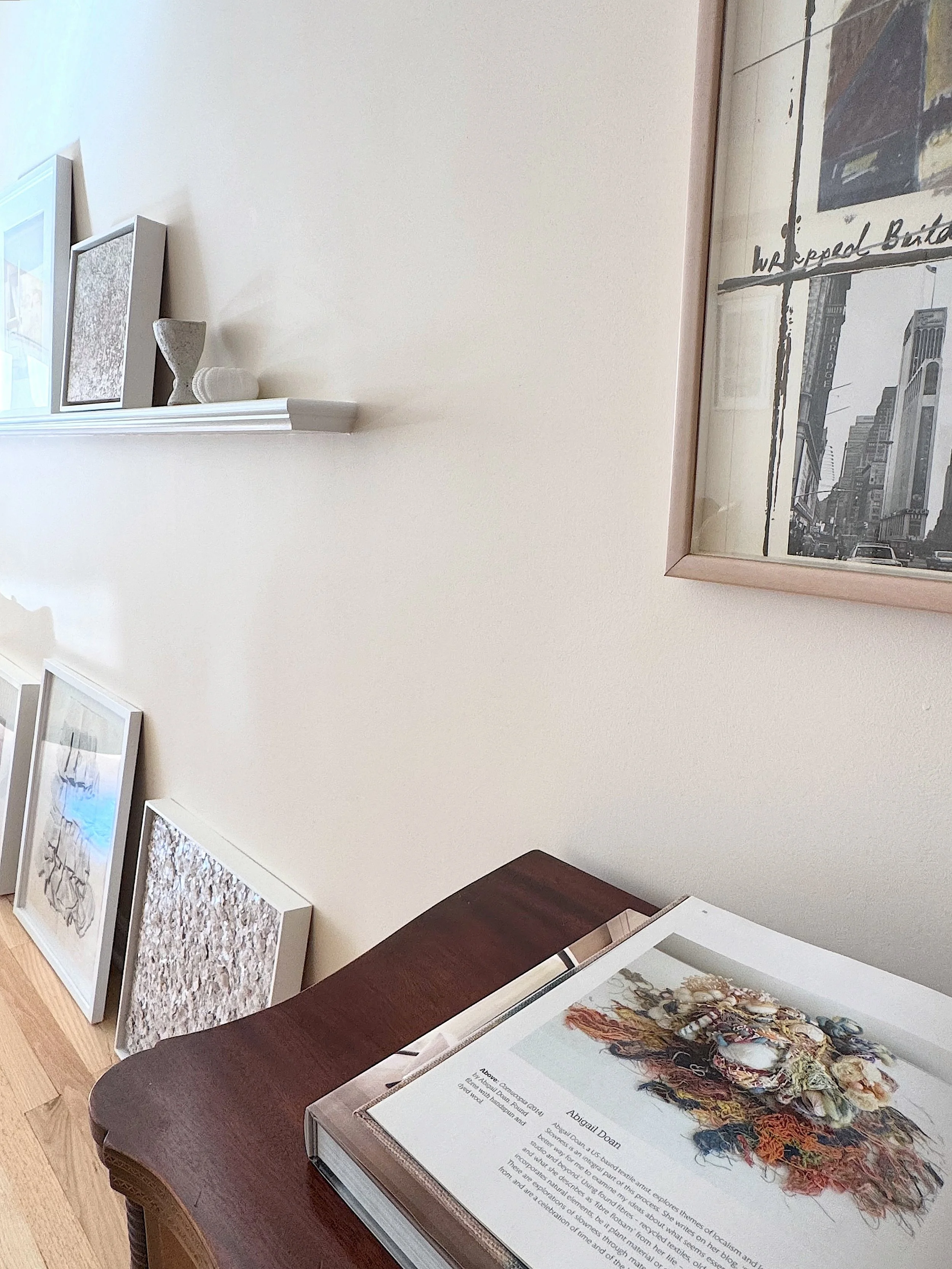
[ image: home as library at Abigail Doan studio ]
Session 03. Home as Library
[ December 2025 ]
“I have always imagined that Paradise will be a kind of library.”
― Jorge Luis Borges, Argentine writer, essayist, and poet
I came across this Borges quote years ago, and it really struck me. Since then, I have often thought about how one’s home might be a library of sorts—an open archive of life unfolding, objects and volumes being preserved, and a sanctuary at that.
If a traditional library features books, a home collects moments: objects, gestures, routines, and traces of the beings who move through it. Each shelf, drawer, and surface holds some fragment of a unique story. Over time, these fragments accumulate into something like a personal archive, an index of days lived and observations made.
Thinking of home in this way shifts it from being merely a container for our lives to being an active record of them. Some details are meticulously considered; others arrive by chance. Together, they reveal not only who we are, but who we have been and who we are still becoming. We edit our surroundings as we edit ourselves, quietly rewriting the narrative of home through small acts of arrangement, care, neglect, and attention.
The familiarity of our things, the paths we walk through our rooms, the small rituals that shape our days: all of these create a sanctuary space in which we can rest inside our own unfolding narrative. Like a Borges library, our homes might feel infinite in the possibilities they contain, but they are also intimate—finite rooms holding the vastness of a life in progress and a paradise that is a living document for those stories we are still learning how to tell.

Session 02. Care and Curating
[ November 2025 ]
There are many deserving things and places to care about and care for during these times. Curating also requires care – beyond the methods we might have envisioned to date.
I recently revisited the terms care and curate, decoding that curating extends beyond the selection and presentation of a collection of things or ideas. The Latin root of curate,“cūra,” signifies care, concern, or healing, while the verb, “cūrāre,” implies simply taking care of. Curating today might encompass relational care beyond the formal highlighting of objects and their histories and narratives.
Communities and the environment need our care and attention, as do the injustices that erode the dignity and integrity of community life. Repair is required, and in many cases, reframing is essential. Acknowledgment of the endangered, marginalized, and seemingly invisible also requires targeted care and rethinking, reworking.
Where to begin? What to focus on? How to make an impact? In moments of overwhelm, I call upon times when care felt natural.
For me, this includes the following memories, in no specific order:
Care for – baby goats and angora rabbits on our farm (before and after the elementary school day), my younger brother while my parents were farming, my grandmother after school, chores around the house as the eldest child, rural neighbors who were trying to stay afloat, high school classmates, art school and college friends, professional design/media projects that required creative direction, the organizing of exhibitions and curatorial statements focused on cultural and environmental preservation, homes or properties that required repair or restoration, and care for my own children (twins) and my partner (best friend) as well as pets.
All of this has felt like care, and in the end, has been part of a cumulative timeline in curating a life. These efforts have required resourcefulness and an awareness of how relationships and being open to change might entail a work ethos that is its own form of self expression. In this spirit, I am reminded of a quote by Ruth Asawa – artist, educator, sculptor, caregiver, parent: “Sculpture is like farming. If you just keep at it, you can get a lot done.”
[ image: cholla helix, sculpture: Abigail Doan studio ]
Session 02. visualization / writing prompt
How do you care for materials and objects in your space? Do you arrange, highlight, repair, reposition, or tend to these forms in a specific way?
In what ways does care for yourself, others, and/or your environment connect you to a practice that extends beyond definitions of what curating (in this context, ‘caring for’) might look like?
If you had a space to curate that was an imaginary realm, with all possible materials and/or objects available, what would this look or feel like?
Is there an existing place that you feel needs care by the implementation of simple acts?
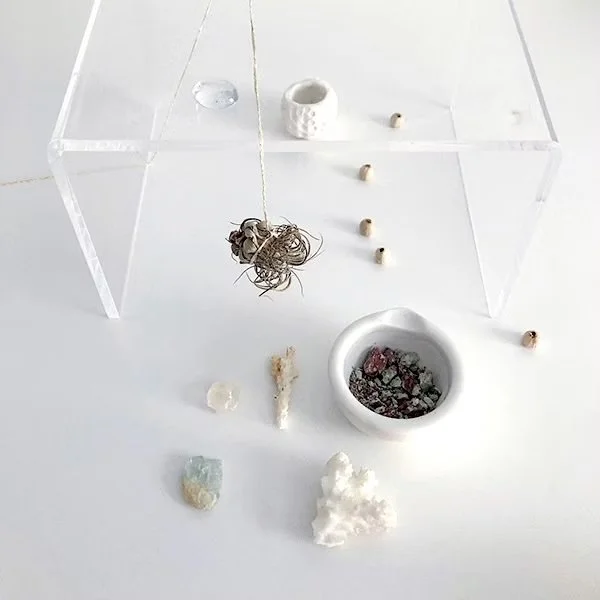
Featured images are from the library | studio archives:
Abigail Doan, 2. Hella Jongerius, 3-6. Abigail Doan
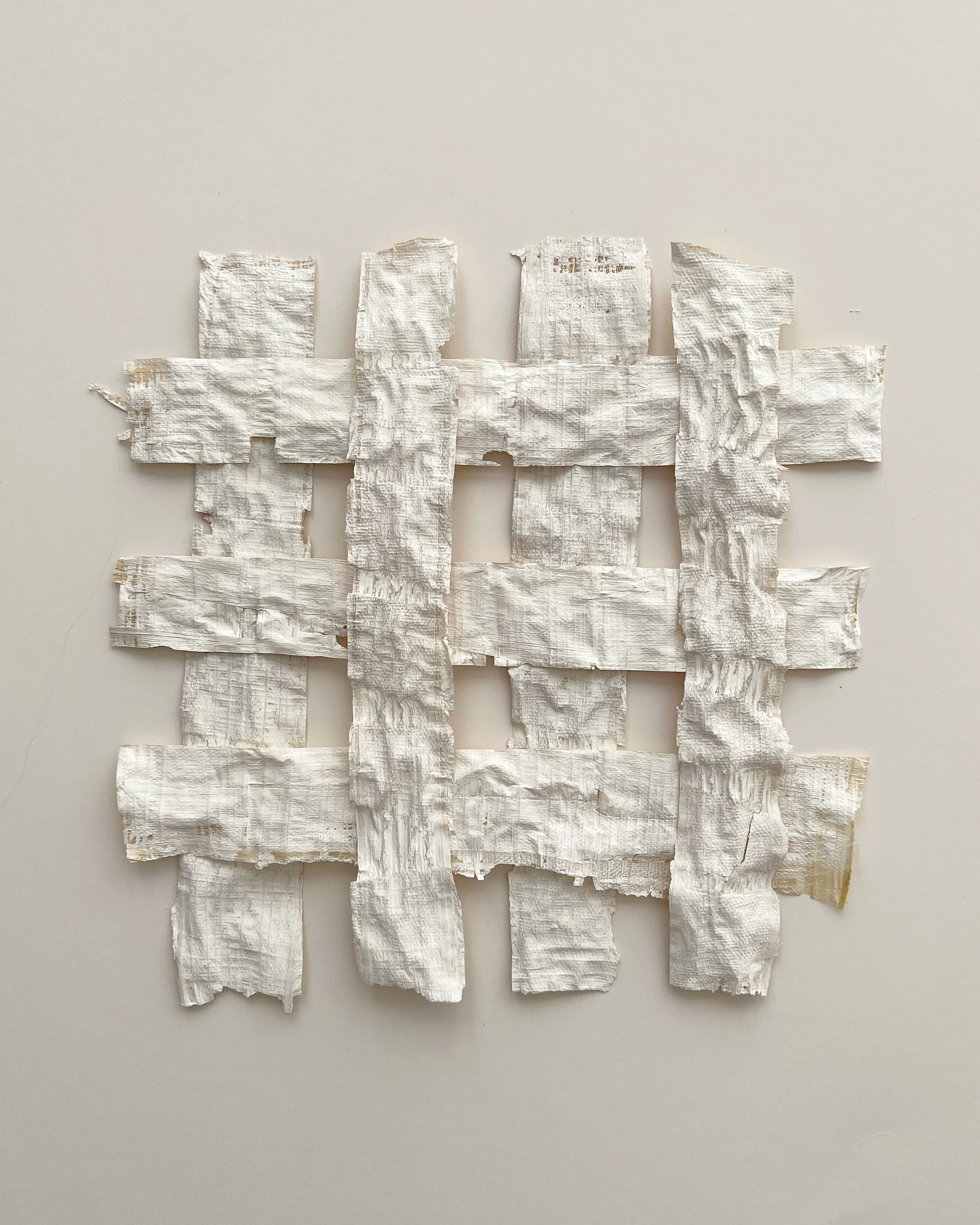


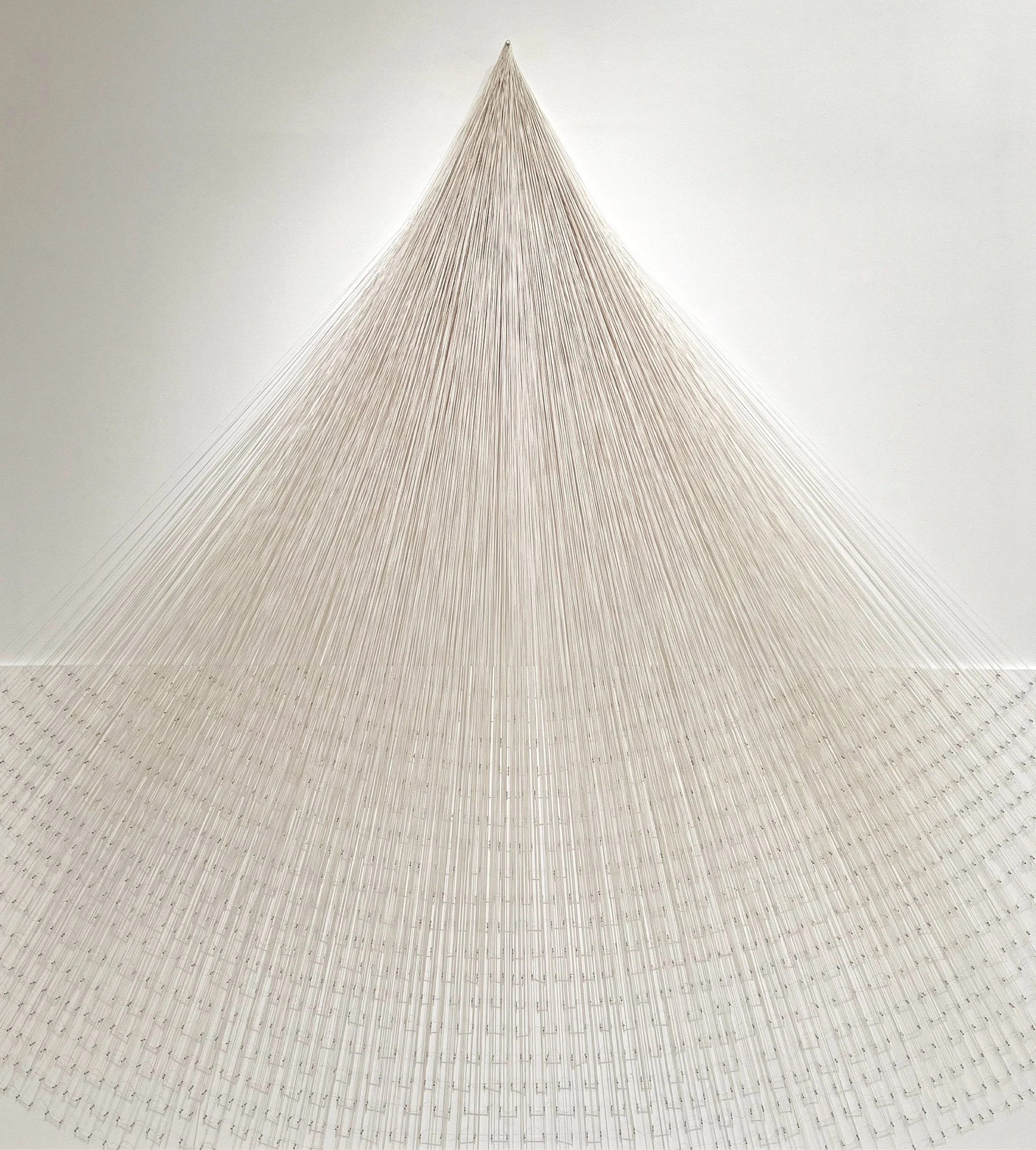
Session 01. Spinning Threads and Systems
[ October 2025 ]
When I was a drawing instructor for first-year university students, I spent a lot of time thinking about how to create activities and lessons that would encourage experimentation with line as a connective tool. Line was introduced as thread that started at a fixed point and could then be extended or stretched to another point – becoming a filament that might continue in space or be invisibly wrapped around a form to create volume. Students would begin an exercise with pencil to paper, slowly extending their drawn lines – gradually building up spatial complexity and interwoven planes on the page surface. I slyly told them that anyone could draw if they were crafting space this way. (It was a playful way to also introduce 3D design concepts and avoid the ‘shade-it-in’ drawing tactic learned in high school.)
In the same vein, I feel as if anyone can start to write, or be playful about writing, if words are allowed to extend into space – along a threaded narrative. Perhaps more than writing, one might simply be spinning a passage.
This quote from E.J. W. Barber’s book, Prehistoric Textiles (page 41), seems apropos in this context:
“Spinning, technically speaking, involves both twisting and drawing out (or drafting) the fibers of the raw material into a thread. Since spinning is no longer the daily household task that it used to be, we now think of the word spin as meaning simply to ‘twirl.’ But originally the root had much more to do with the notion of drawing out or stretching from one place to another (as in the English ‘span’ or the phrase, ‘spin a tale).”
Spinning fiber into thread might be applied in many contexts: art installations, the creation of cloth, the writing of a passage, and/or the preservation of an idea or unique materials.
[ image: Kazuko Miyamoto, photo: Abigail Doan studio ]
Session 01. visualization / writing prompt
In what ways do you create systems in your environment to preserve what matters to you?
Do you create small installations or personal libraries to preserve these ideas?
If so, how do you approach archiving or organizing these objects and materials?
Is there a thread that conceptually connects things, or is there another method that you like to incorporate?
What would you change about this method or system to have the threads become more evident, or not?
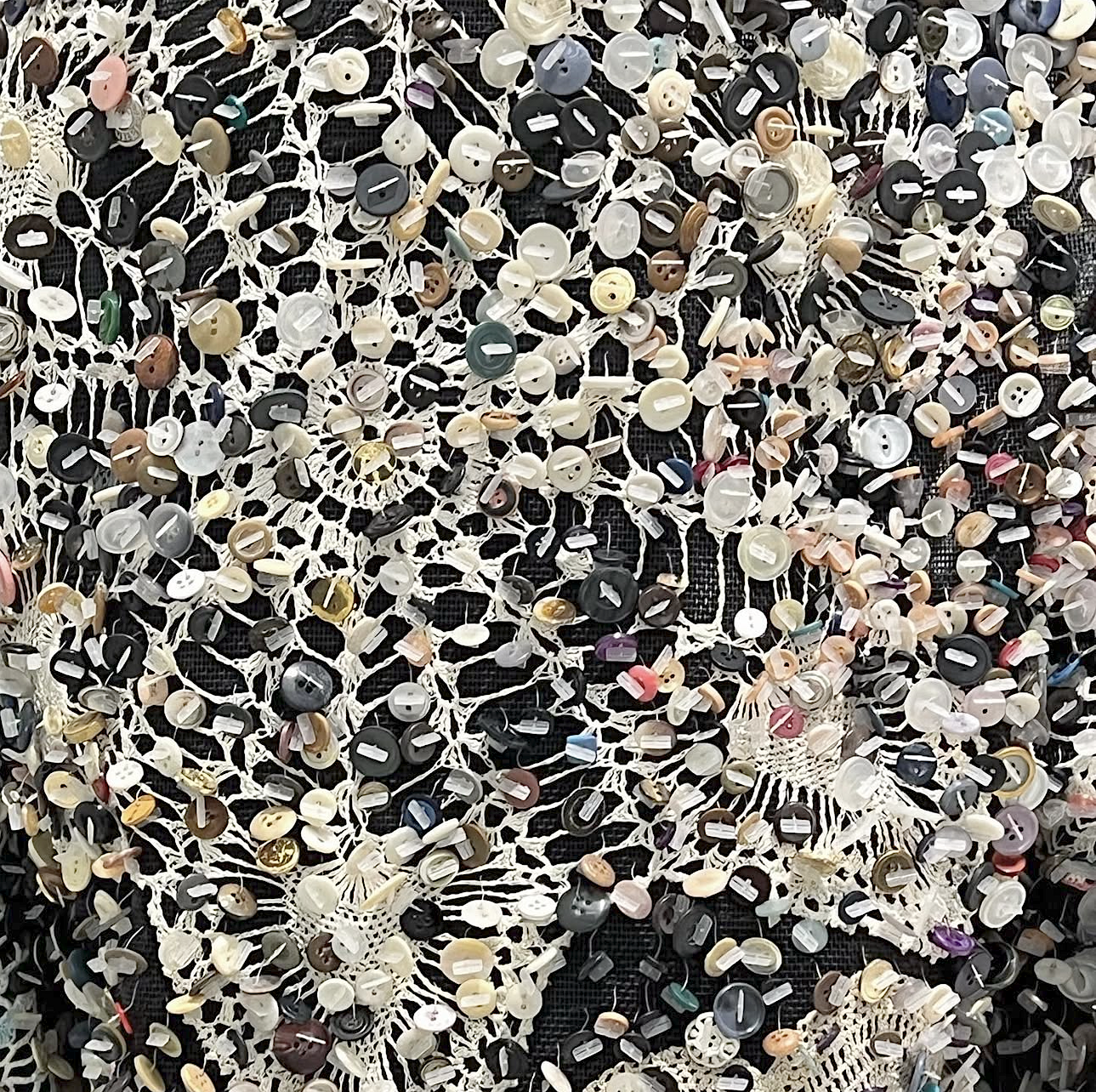
Featured images are from my library and studio archives, in sequence:
1. Abigail Doan, 2. Nick Cave, 3-5. Abigail Doan, 6. Christiane Löhr